Leveraging AI in Test Automation

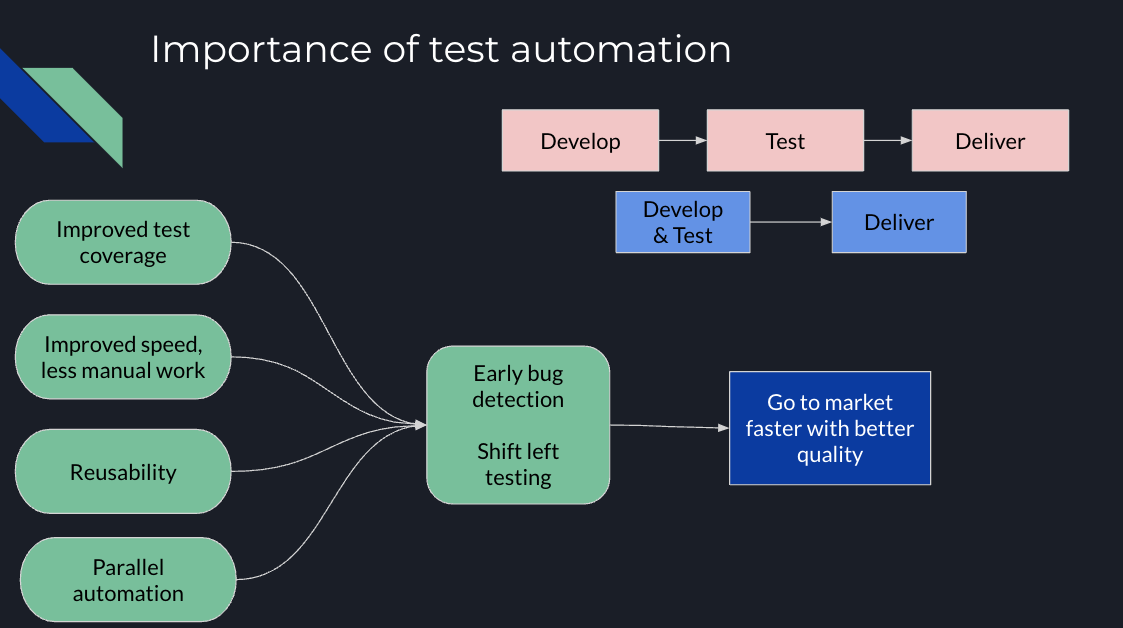
In today’s fast-paced software development world, test automation has become a necessity rather than a luxury. However, traditional automation frameworks still require significant manual effort for test maintenance, report analysis, and adapting to evolving requirements. This is where Artificial Intelligence (AI) in test automation comes into play, bringing efficiency, accuracy, and scalability to the process.
In this blog, we will explore how AI-driven test automation is revolutionizing software testing, its key benefits, and some scenarios where AI can be used to enhance modern QA practices.
What is AI in Test Automation?Direct link to What is AI in Test Automation?
AI in Test Automation involves the use of artificial intelligence and machine learning algorithms to improve the efficiency, accuracy, and coverage of software testing processes.

The Need for AI in Test AutomationDirect link to The Need for AI in Test Automation
Challenges in Traditional Test AutomationDirect link to Challenges in Traditional Test Automation
- High Maintenance Overhead: Frequent changes in UI and APIs require continuous script updates.
- Manually Validate Results: Validating the results and identifying root causes can be time consuming and prone to error.
- Flaky Tests: False positives and inconsistent test results reduce trust in automation.
- Steep learning curve: Traditional automation requires a lot of coding and libraries especially for multiple pillars of testing.
How AI Solves These ChallengesDirect link to How AI Solves These Challenges
- Self-healing Test Scripts: AI-powered tools detect changes in the UI and adjust scripts automatically.
- Automated Test Case & Data Generation: AI identifies patterns and generates test scenarios dynamically.
- Defect Prediction: Machine learning models predict failures before they happen.
- Smart Report Analysis: AI-driven insights help QA teams quickly pinpoint root causes.
Key AI-Powered Capabilities in Test AutomationDirect link to Key AI-Powered Capabilities in Test Automation
1. AI-Based Test Case GenerationDirect link to 1-ai-based-test-case-generation
Leveraging machine learning and natural language processing (NLP), AI can generate test cases based on application usage patterns and historical test data. This reduces manual effort and ensures better test coverage.
2. Automated Test Data GenerationDirect link to 2. Automated Test Data Generation
AI helps in synthesizing test data that mimics real-world scenarios. This is particularly useful for data-driven testing and performance benchmarking.
3. AI-Driven Test ExecutionDirect link to 3. AI-Driven Test Execution
Modern AI-powered frameworks optimize test execution by selecting the most relevant test cases, reducing redundant test runs, and prioritizing critical test scenarios.
4. Self-Healing Test ScriptsDirect link to 4. Self-Healing Test Scripts
Self-healing capabilities enable automated tests to adapt to UI changes without manual intervention, reducing flakiness in test scripts.
5. Visual Testing with AIDirect link to 5. Visual Testing with AI
Instead of pixel-to-pixel comparisons, AI-based visual testing tools detect stylistic and functional inconsistencies between web pages and design mockups. This is crucial for UI/UX validation.
6. AI-Driven Automation Report AnalysisDirect link to 6. AI-Driven Automation Report Analysis
AI analyzes test execution logs, identifies anomalies, and predicts potential failures, improving test debugging efficiency.
Here are some sample scenarios on how AI can be used in Test Automation:
ChatGPT : convert Playwright recorded tests to modular frameworksDirect link to chatgpt--convert-playwright-recorded-tests-to-modular-frameworks

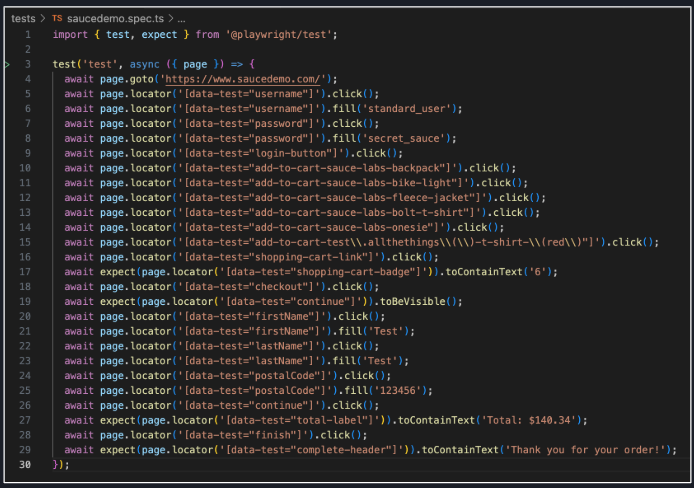
Step 1 - Record with playwright
Let's record a complete end to end scenario with playwright's codegen.
Step 2 : Create the Prompt
Convert the following playwright script that was created using a playwright recorder into a modular and maintainable framework. The scripts should be in typescript.
GOAL: Define what you want to Achieve
CONTEXT: Provide enough background for the AI to understand the scenario
EXPECTATION: Format or target audience you want the response tailored to.
SOURCE: Any sources that can be used as a reference.
Here are the responses for the prompt -
1. Project Structure
project-root/
├── tests/
│   ├── login.test.ts
│   ├── add-to-cart.test.ts
│   ├── checkout.test.ts
├── pages/
│   ├── login.page.ts
│   ├── inventory.page.ts
│   ├── cart.page.ts
│   ├── checkout.page.ts
├── playwright.config.ts
└── tsconfig.json
2. playwright.config.ts
import { PlaywrightTestConfig } from '@playwright/test';

const config: PlaywrightTestConfig = {
  use: {
    baseURL: 'https://www.saucedemo.com',
    headless: true,
  },
  reporter: [['list'], ['html']],
};

export default config;
3. tsconfig.json
{
  "compilerOptions": {
    "target": "ESNext",
    "module": "CommonJS",
    "lib": ["ESNext", "DOM"],
    "outDir": "./dist",
    "rootDir": ".",
    "strict": true,
    "esModuleInterop": true,
    "skipLibCheck": true,
    "forceConsistentCasingInFileNames": true
  },
  "include": ["./**/*.ts"],
  "exclude": ["node_modules"]
}
4. Page Object Models
pages/login.page.ts
import { Page } from '@playwright/test';

export class LoginPage {
  constructor(private page: Page) {}

  async goto() {
    await this.page.goto('/');
  }

  async login(username: string, password: string) {
    await this.page.fill('[data-test="username"]', username);
    await this.page.fill('[data-test="password"]', password);
    await this.page.click('[data-test="login-button"]');
  }
}
pages/inventory.page.ts
import { Page } from '@playwright/test';

export class InventoryPage {
  constructor(private page: Page) {}

  async addItemToCart(itemName: string) {
    await this.page.click(`[data-test="add-to-cart-${itemName}"]`);
  }

  async goToCart() {
    await this.page.click('[data-test="shopping-cart-link"]');
  }
}
pages/cart.page.ts
import { Page } from '@playwright/test';

export class CartPage {
  constructor(private page: Page) {}

  async verifyItemsInCart(count: number) {
    await this.page.waitForSelector(`[data-test="shopping-cart-badge"]`);
    const cartCount = await this.page.innerText('[data-test="shopping-cart-badge"]');
    return parseInt(cartCount) === count;
  }

  async proceedToCheckout() {
    await this.page.click('[data-test="checkout"]');
  }
}
pages/checkout.page.ts
import { Page } from '@playwright/test';

export class CheckoutPage {
  constructor(private page: Page) {}

  async fillCheckoutInfo(firstName: string, lastName: string, postalCode: string) {
    await this.page.fill('[data-test="firstName"]', firstName);
    await this.page.fill('[data-test="lastName"]', lastName);
    await this.page.fill('[data-test="postalCode"]', postalCode);
    await this.page.click('[data-test="continue"]');
  }

  async verifyTotalAmount(amount: string) {
    await this.page.waitForSelector('[data-test="total-label"]');
    const total = await this.page.innerText('[data-test="total-label"]');
    return total.includes(amount);
  }

  async finishCheckout() {
    await this.page.click('[data-test="finish"]');
  }

  async verifyOrderCompletion() {
    await this.page.waitForSelector('[data-test="complete-header"]');
    const header = await this.page.innerText('[data-test="complete-header"]');
    return header.includes('Thank you for your order!');
  }
}
5. Tests
tests/login.test.ts
import { test } from '@playwright/test';
import { LoginPage } from '../pages/login.page';

test.describe('Login', () => {
  test('should login successfully', async ({ page }) => {
    const loginPage = new LoginPage(page);
    await loginPage.goto();
    await loginPage.login('standard_user', 'secret_sauce');
  });
});
tests/add-to-cart.test.ts
import { test, expect } from '@playwright/test';
import { LoginPage } from '../pages/login.page';
import { InventoryPage } from '../pages/inventory.page';
import { CartPage } from '../pages/cart.page';

test.describe('Add to Cart', () => {
  test.beforeEach(async ({ page }) => {
    const loginPage = new LoginPage(page);
    await loginPage.goto();
    await loginPage.login('standard_user', 'secret_sauce');
  });

  test('should add items to cart', async ({ page }) => {
    const inventoryPage = new InventoryPage(page);
    const cartPage = new CartPage(page);

    const items = [
      'sauce-labs-backpack',
      'sauce-labs-bike-light',
      'sauce-labs-fleece-jacket',
      'sauce-labs-bolt-t-shirt',
      'sauce-labs-onesie',
      'test\\.allthethings\\(\\)-t-shirt-\\(red\\)'
    ];

    for (const item of items) {
      await inventoryPage.addItemToCart(item);
    }

    await inventoryPage.goToCart();
    expect(await cartPage.verifyItemsInCart(items.length)).toBe(true);
  });
});
tests/checkout.test.ts
import { test, expect } from '@playwright/test';
import { LoginPage } from '../pages/login.page';
import { InventoryPage } from '../pages/inventory.page';
import { CartPage } from '../pages/cart.page';
import { CheckoutPage } from '../pages/checkout.page';

test.describe('Checkout', () => {
  test.beforeEach(async ({ page }) => {
    const loginPage = new LoginPage(page);
    await loginPage.goto();
    await loginPage.login('standard_user', 'secret_sauce');
  });

  test('should complete checkout process', async ({ page }) => {
    const inventoryPage = new InventoryPage(page);
    const cartPage = new CartPage(page);
    const checkoutPage = new CheckoutPage(page);

    const items = [
      'sauce-labs-backpack',
      'sauce-labs-bike-light',
      'sauce-labs-fleece-jacket',
      'sauce-labs-bolt-t-shirt',
      'sauce-labs-onesie',
      'test\\.allthethings\\(\\)-t-shirt-\\(red\\)'
    ];

    for (const item of items) {
      await inventoryPage.addItemToCart(item);
    }

    await inventoryPage.goToCart();
    expect(await cartPage.verifyItemsInCart(items.length)).toBe(true);
    await cartPage.proceedToCheckout();

    await checkoutPage.fillCheckoutInfo('Test', 'Test', '123456');
    expect(await checkoutPage.verifyTotalAmount('Total: $140.34')).toBe(true);
    await checkoutPage.finishCheckout();
    expect(await checkoutPage.verifyOrderCompletion()).toBe(true);
  });
});
This framework is now modular and makes it easy to manage and extend the tests by adding more pages and test cases. Each test case uses the page objects for a more organized and maintainable codebase.
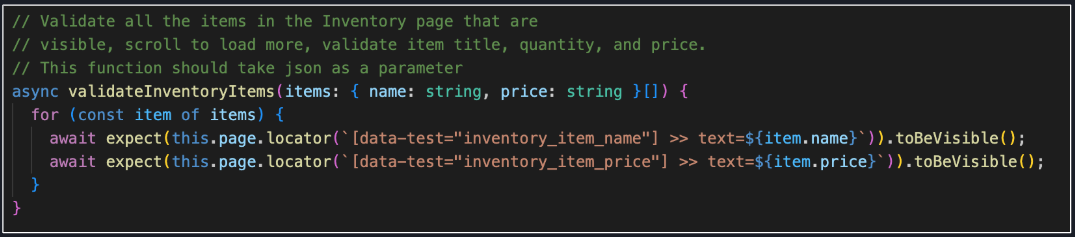
Github copilot for Code completionsDirect link to Github copilot for Code completions

Visual Testing with GPTDirect link to Visual Testing with GPT
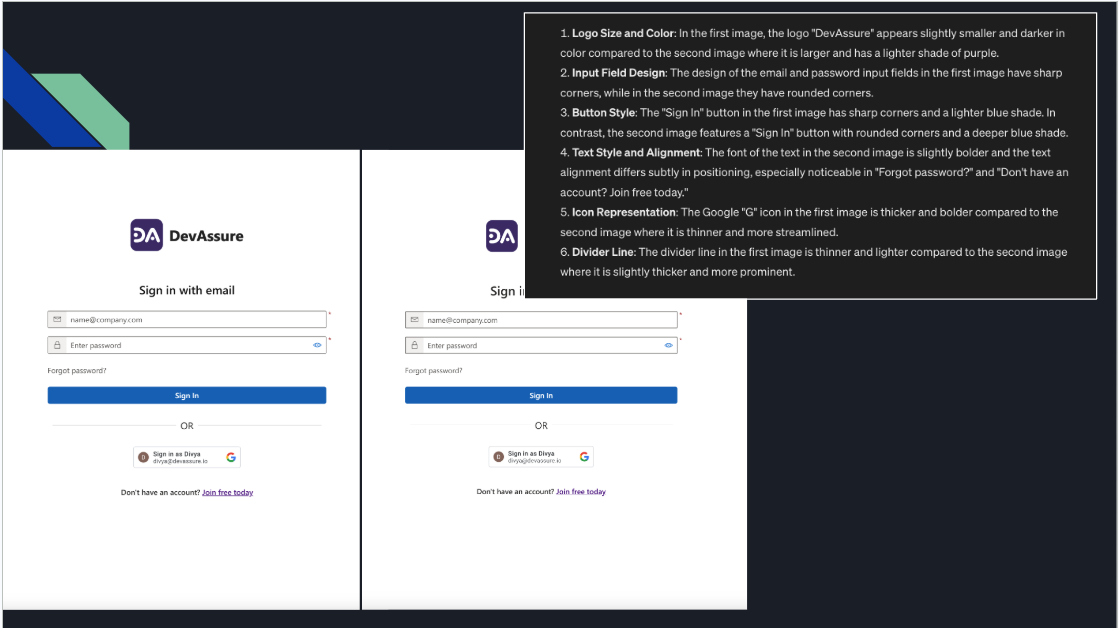
- Compare the rendered web page with the design mockup to check for visual inconsistencies.
- Indication of Stylistic changes
- Not a pixel to pixel comparison
- Feature Testing and for regression analysis
Automation of Visual Regression Testing:Direct link to Automation of Visual Regression Testing:
Continuous integration of visual testing in the development pipeline ensures that any visual discrepancies are caught early.
Automation Report Analysis with AIDirect link to Automation Report Analysis with AI
AI/ML Frameworks:
- Python with Scikit-Learn, TensorFlow, PyTorch: For building custom machine learning models to analyze test data and predict failures or anomalies.
- Natural Language Processing (NLP): To analyze test logs using tools like SpaCy, Hugging Face Transformers.
- Time-Series Analysis: Using libraries like Prophet, Darts for analyzing trends in test results over time.
The Future of AI in Test AutomationDirect link to The Future of AI in Test Automation
As AI continues to evolve, we can expect even more autonomous and intelligent test automation solutions that require minimal human intervention. Generative AI, predictive analytics, and AI-driven defect prevention will play a pivotal role in shaping the future of QA.
By integrating AI into test automation strategies, organizations can accelerate release cycles, improve software quality, and reduce manual efforts, ensuring a seamless digital experience for end users.
ConclusionDirect link to Conclusion
AI in test automation is no longer a futuristic concept—it is transforming QA today. By leveraging AI-driven tools and frameworks, companies can achieve higher efficiency, lower costs, and improved test reliability. If you haven't already started incorporating AI in your test automation strategy, now is the time!
Would you like to learn how DevAssure uses AI for testing?
Frequently Asked Questions (FAQs)Direct link to Frequently Asked Questions (FAQs)
AI in test automation refers to the use of artificial intelligence and machine learning techniques to enhance software testing processes. It helps in optimizing test case generation, execution, and defect detection.