Best Cross Browser Testing Tools

Is the Search for the Ultimate Cross-Browser Testing Tool Turning Into a Never-Ending Quest?
In today’s dynamic digital landscape, delivering a consistent and seamless user experience across a multitude of browsers and devices is no longer optional; it's essential.
Yet, for many developers and testers, achieving that level of consistency feels like chasing a moving target. Browser discrepancies, rendering issues, and varying device behaviors often lead to frustrating roadblocks that can derail even the most well-planned deployments.
That’s where a cross-browser testing tool comes into play. By adopting a standardized and scalable solution, teams can eliminate browser-based inconsistencies and ensure that every user, regardless of their browser or device, enjoys a flawless experience.
But why stop at just cross-browser testing? Imagine a single, unified platform that offers omnichannel test automation capabilities—one that enables you to manage and automate test cases, perform in-depth Web and API testing, run visual validations, automate email workflows, and ensure pixel-perfect functionality across browsers and devices. That’s not just testing—that’s intelligent, future-ready QA.
In this blog, we’ll delve into why cross-browser testing is critical in modern software development, and explore a curated list of the most powerful cross-browser testing tools available in the market today. Whether you’re a seasoned QA engineer or just stepping into the realm of test automation, this guide is your compass to navigating the fragmented browser ecosystem.
What is Cross-Browser Testing?
Cross-Browser Testing is the process of evaluating a web application’s compatibility and performance across multiple browsers, devices, and operating systems.
The primary goal is to ensure that the application's user interface (UI) and user experience (UX)—along with its core functionalities—remain consistent and glitch-free, regardless of the environment in which it's accessed.
This type of testing helps uncover browser-specific issues related to rendering, responsiveness, scripting, stylesheets, and interactive elements—making it an essential practice in delivering a polished and professional product that works flawlessly for all users, everywhere.
Why Cross Cross-Browser Testing Important?
Cross-browser testing is important because it ensures your website or web application works consistently and correctly across different browsers, devices, and operating systems. Here's why it really matters:
1. User Experience Consistency 🔍
Different browsers (like Chrome, Firefox, Safari, Edge) may interpret code slightly differently. Cross-browser testing ensures that your layout, styles, and functionalities behave the same no matter which browser the user is on.
2. Avoid Loss of Users 📉
If your site breaks or looks off on a certain browser, users are more likely to leave. Poor experience = lost traffic, lower conversions, and possibly a bad brand impression.
3. Broader Audience Reach 💼
Not everyone uses the latest version of Chrome on desktop. Many still use older versions or different browsers on mobile. Testing helps you cater to a more diverse audience.
4. Catch Browser-Specific Bugs 🐞
Some JavaScript functions, CSS properties, or third-party integrations may work in one browser but fail in another. Cross-browser testing helps catch and fix these inconsistencies early.
5. Responsive & Device Compatibility 📱
It goes hand-in-hand with responsive testing—ensuring your site looks great on all screen sizes across different browsers and devices.
6. Compliance & Professionalism ⚖️
In professional settings, especially in enterprise apps, clients and stakeholders may use a wide range of platforms. You need to ensure compatibility to maintain trust and standards.
Best Cross-Browser Testing Tools
1.DevAssure
Built with robust architecture, DevAssure is one of the best cross-browser testing platforms crafted for software testers. With the help of a no-code, intuitive interface, users can effortlessly automate cross-browser test cases with just a few clicks.
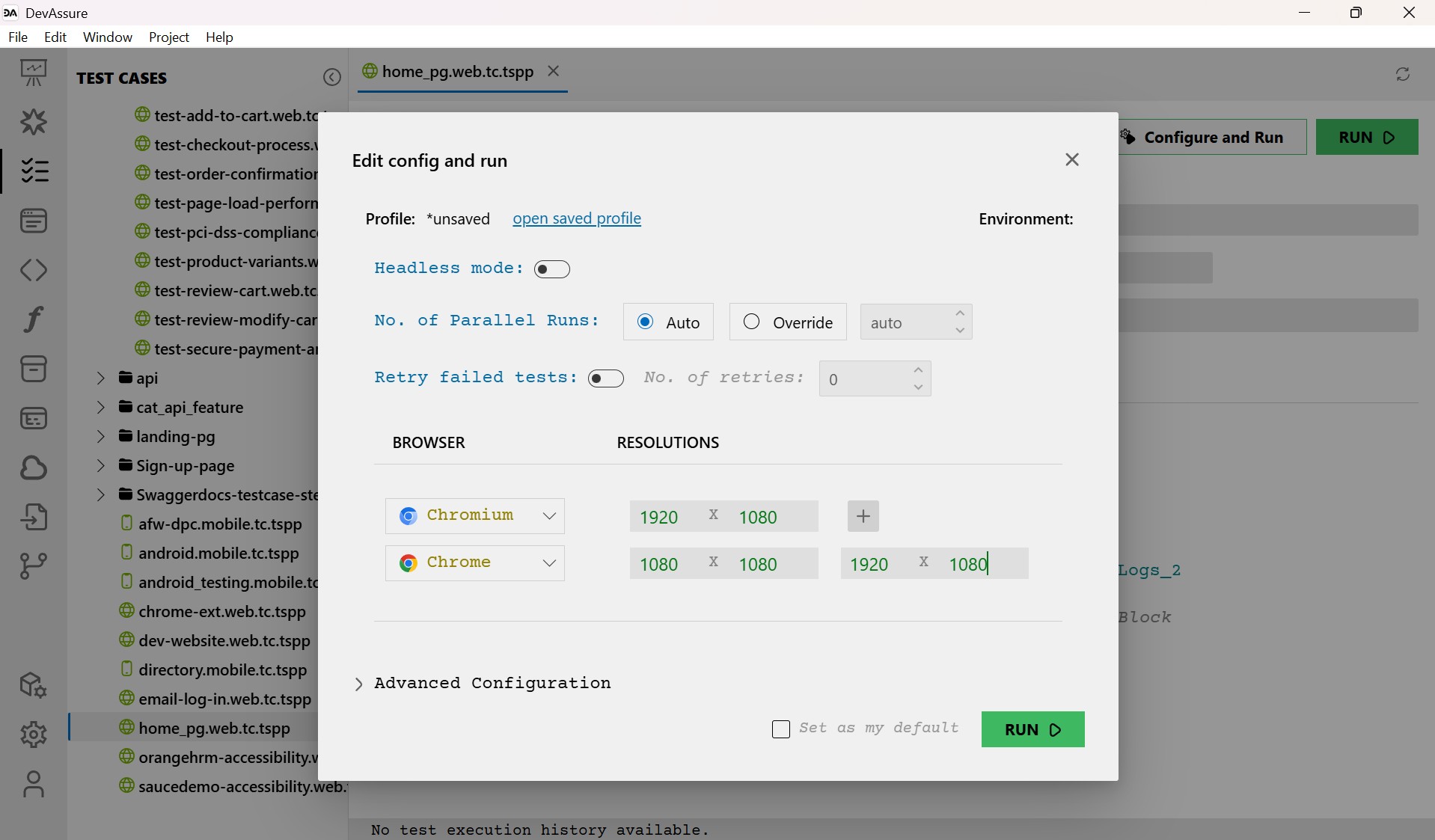
Users can choose from a wide range of Browsers such as Chrome, Chromium, Edge, Safari, as well as set the desired resolutions. This enables software testers to seamlessly test the respective Web Applications under different browsers and resolution combinations.
🚀 See how DevAssure accelerates test automation, improves coverage, and reduces QA effort.
Ready to transform your testing process?
In addition to cross-browser compatibility, Web, API, Accessibility, and Visual test automations can be performed with just a few clicks. Moreover, test case automation, test case management can be performed in a single unified platform.
Secondly, DevAssure is also powered by AI, and users can seamlessly generate test cases using PRDs, screenshots, UI mockups with a few clicks.
DevAssure also helps testing teams to perform email testing, Flutter app automation, Canvas test automation, etc.
DevAssure Cross-Browser Testing Features 🔍
1. Run Profiles for Test Execution:
-
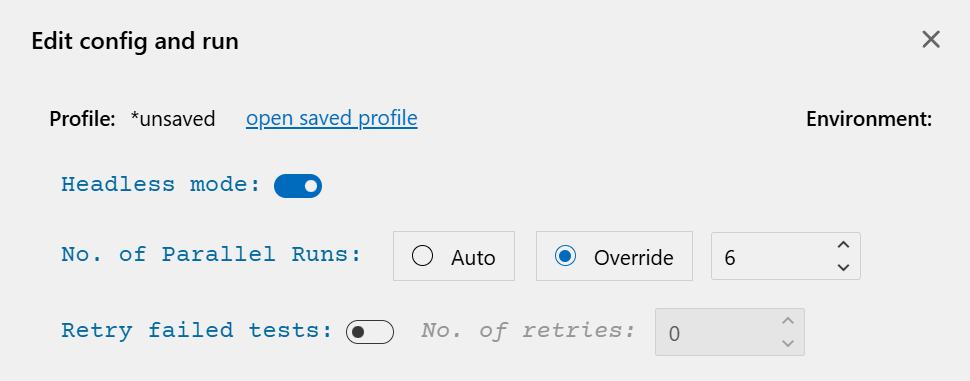
Define comprehensive test execution environments, including browsers, resolutions, headless mode, parallel execution, retry settings, and timeouts.
-
Organize test configurations into reusable profiles to streamline setup and ensure consistent testing across different environments.
2. Browser and Resolution Configuration:
-
Add multiple browsers (e.g., Chrome, Firefox, Edge, Safari, Chromium) to a single run profile.
-
Specify multiple screen resolutions for each browser to test responsiveness and layout consistency.
3. Headless Mode Execution:
- Enable or disable headless browser execution within run profiles to facilitate testing in environments without a graphical user interface.
4. Parallel Test Execution:
- Configure the number of parallel test runs to optimize test execution time and resource utilization.
5. Retry Mechanism for Failed Tests:
- Enable automatic retries for failed tests and specify the number of retry attempts to enhance test reliability.
6. Timeout Settings:
-
Test Timeout: Maximum duration for a single test run.
-
Action Timeout: Maximum wait time for individual test actions.
-
URL Load Timeout: Maximum time allowed for page loads and redirects.
7. Integration with Test Cases and Suites:
- Associate run profiles with specific test cases or test suites to execute tests across the defined browsers and resolutions.
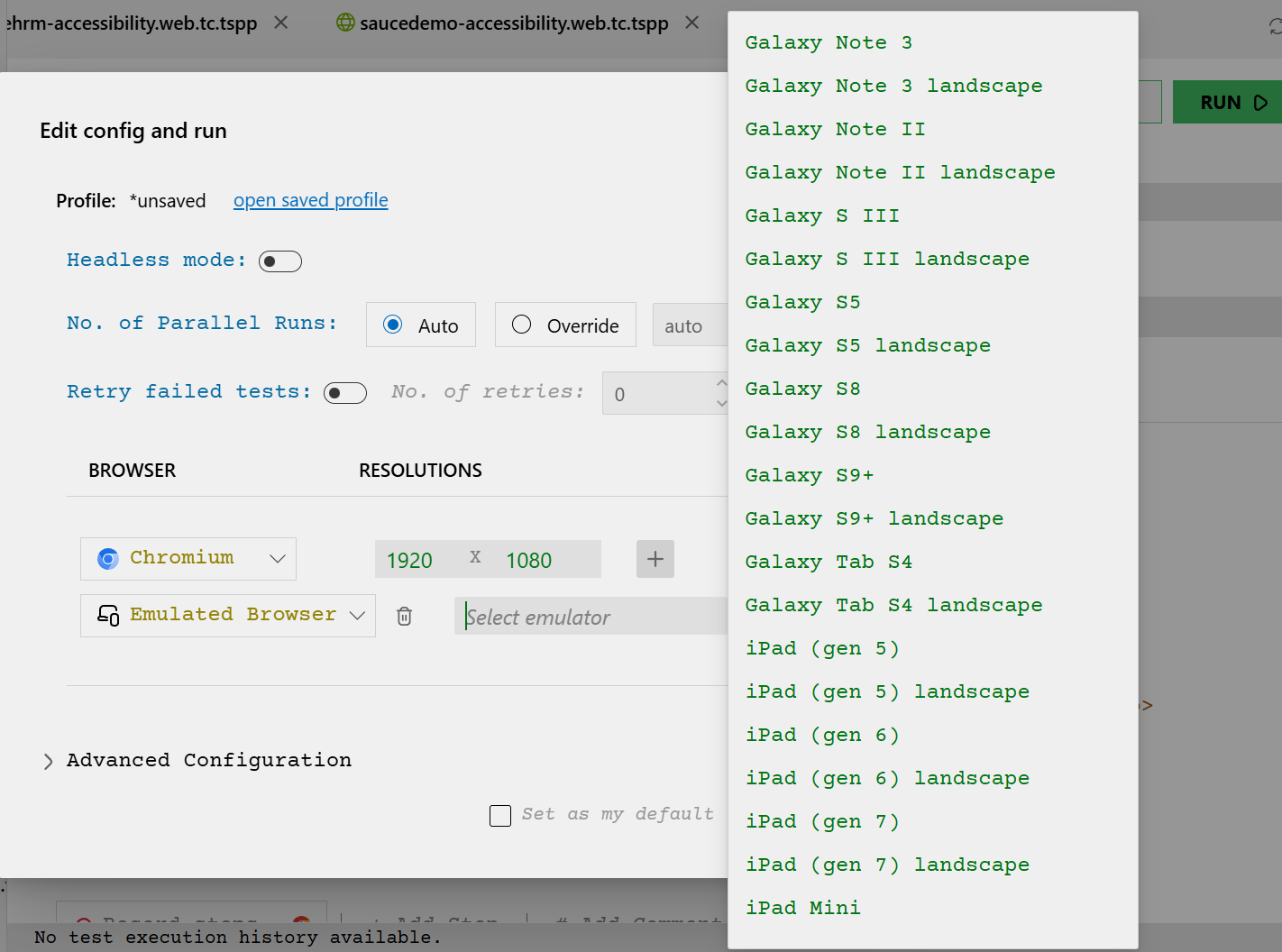
8. Support for Major Browsers and Emulators:
DevAssure supports the latest versions of commonly used browsers, including:
-
Firefox
-
Chrome
-
Edge
-
Safari
-
Chromium
-
Emulated Browsers (iOS & Android)
9.Visual Testing Integration:
-
Automatically capture and compare screenshots at any test step to detect visual changes and regressions.
-
Run visual tests alongside functional and API testing to ensure UI consistency across different browsers and devices.
10. No-Code Test Automation Interface:
Utilize an intuitive, No-code interface to quickly create and execute tests, enhancing efficiency in test creation and maintenance.
2. Selenium
Second on the list is Selenium. Selenium is widely used for Cross Browser Testing, and while it doesn’t provide a GUI or cloud grid on its own, it offers powerful features that let you automate testing across different browsers.
✅ Selenium Grid Architecture Diagram (Text Version)
            +------------+
            |  Test Code |
            +------------+
                  |
                  v
            +------------+
            |    HUB     |
            +------------+
             /     |     \
            /      |      \
     +--------+ +--------+ +--------+
     | Node 1 | | Node 2 | | Node 3 |
     | Chrome | |Firefox | | Edge   |
     +--------+ +--------+ +--------+
✅ Example: Cross-Browser Testing Using Selenium Grid
🔹 Step 1: Start the Hub
java -jar selenium-server-<version>.jar hub
🔹 Step 2: Start the Nodes
java -jar selenium-server-<version>.jar node --hub http://localhost:4444
Add specific browser support using config or parameters.
✅ Python Example Using Selenium Grid
from selenium import webdriver
from selenium.webdriver.common.desired_capabilities import DesiredCapabilities

# Define the Grid Hub URL
hub_url = "http://localhost:4444/wd/hub"

# Test on Chrome
driver_chrome = webdriver.Remote(
    command_executor=hub_url,
    desired_capabilities=DesiredCapabilities.CHROME
)
driver_chrome.get("https://example.com")
print("Title on Chrome:", driver_chrome.title)
driver_chrome.quit()

# Test on Firefox
driver_firefox = webdriver.Remote(
    command_executor=hub_url,
    desired_capabilities=DesiredCapabilities.FIREFOX
)
driver_firefox.get("https://example.com")
print("Title on Firefox:", driver_firefox.title)
driver_firefox.quit()
✅ Tips for Reliable Cross-Browser Testing with Grid
-
Use a Selenium Grid manager like Selenoid or Docker Selenium Grid for scalability.
-
Integrate with CI/CD tools (Jenkins, GitHub Actions).
-
Use tools like BrowserStack or SauceLabs if you need real mobile/OS combos.
Here's a breakdown of Selenium's cross-browser testing capabilities:
Key Cross-Browser Testing Features in Selenium 🌐
1. Multi-Browser Support
Eg : for running test in chrome and firefox
# Chrome
chrome_driver = webdriver.Chrome()
chrome_driver.get("https://example.com")

# Firefox
firefox_driver = webdriver.Firefox()
firefox_driver.get("https://example.com")
2. Cross-Platform Support
Selenium tests can be executed on different operating systems like Windows, macOS, Linux, and even mobile OS (through integrations like Appium for mobile apps).
3. Parallel Test Execution
Using tools like TestNG, JUnit, combined with Selenium Grid, software testers can run tests on multiple browsers at the same time. This speeds up your cross-browser test cycles significantly.
It’s perfect for large-scale cross-browser testing setups.
4. Headless Browser Testing
Selenium supports headless mode (like in Headless Chrome or Firefox) to run tests faster without UI rendering, useful in CI pipelines.
3. Playwright
Playwright is designed from the ground up for cross-browser testing and offers a smoother and more modern approach compared to Selenium.
Cross-Browser Testing Features in Playwright 🌐
1. Built-in Multi-Browser Support
Playwright supports Chromium, Firefox, and WebKit out of the box:
-
✅ Chromium (covers Chrome + Edge)
-
✅ Firefox (Gecko engine)
-
✅ WebKit (covers Safari)
This means you can test across all major browser engines using one API.
2. Cross-Platform Compatibility
Software testers can run tests on:
-
Windows
-
macOS
-
Linux
And since it supports WebKit, you can test Safari behavior even on non-Mac systems (huge win over Selenium!).
3. Headless & Headful Modes
All browsers can run in:
-
Headless mode (great for CI)
-
Headful mode (for debugging with UI)
4. Parallel Test Execution
Playwright Test (its own test runner) supports:
-
Parallel execution by default
-
Sharding and project-specific configurations (browser, device, viewport)
5. Browser Contexts (Like Incognito Tabs)
Each test runs in a separate browser context to isolate sessions, cookies, localStorage, etc., without restarting the browser.
4. Browserstack
BrowserStack supports cross-browser testing, especially when integrated with automation frameworks like Selenium, Playwright, and others.
1. Real Device Cloud
BrowserStack provides real devices and browsers, not emulators or simulators. You can test on:
-
Windows, macOS, iOS, Android
-
3000+ real browser-device combinations
2. Manual Testing on Real Browsers
Live interactive testing on various OS-browser combinations
-
Responsive design testing
-
Geolocation testing
-
Accessibility tools
-
Screenshot and video recording
3. Automated Cross-Browser Testing
Supports major automation frameworks:
✅ Selenium
✅ Playwright
✅ Cypress
✅ Appium
✅ Puppeteer
4. Parallel Testing
You can run tests concurrently across multiple browser/OS combinations, reducing total execution time significantly.
5. Wide Range of Browsers & Versions
Test on legacy and latest browser versions:
-
Chrome (v15 to latest)
-
Firefox (v3 to latest)
-
Safari (v5.1 to latest)
-
Edge (including Legacy and Chromium)
-
Internet Explorer (v6 to v11)
5. Lambda Test
LambdaTest is another powerful cloud-based cross-browser testing platform that offers both manual and automated testing across a wide range of browsers, devices, and OS combinations
Cross-Browser Testing Features in LambdaTest 🌐
1. Real Browser and Device Testing
Access to real-time browsers on cloud VMs and real mobile devices
Test on 3000+ combinations: Chrome, Firefox, Safari, Edge, Opera on Windows, macOS, Android, iOS
2. Automated Browser Testing
Supports major frameworks such as Selenium, Playwright, Cypress, Appium, Puppeteer, TestCafe, Nightwatch.js etc.
3. Parallel Test Execution
Run multiple tests simultaneously across different browsers to save time. Great for scaling automation in CI/CD pipelines.
4. HyperExecute (Blazing Fast Test Execution)
LambdaTest’s HyperExecute is a test orchestration cloud that is faster than traditional Selenium Grids. It provides:
-
Smart test orchestration
-
Intelligent test retries
-
Real-time logging & visual reports
-
Language support: Java, Node.js, Python, .NET, etc.
5. Responsive Testing
-
Interactive testing on different screen sizes
-
Pre-built device viewports for mobile & tablet
-
Screenshot comparison for responsive design validation
Conclusion
Thus, cross-browser testing empowers software testers to validate a web application’s performance, layout, and functionality across a wide range of browsers, screen resolutions, and devices. This ensures a consistent and high-quality user experience, no matter how or where the application is accessed.
What’s more, leveraging cross-browser testing tools allows QA engineers to automate the entire testing workflow, minimizing manual effort and reducing the chances of human error. By adopting unified testing platforms like DevAssure, which seamlessly support Web, API, Accessibility, and Mobile App automation, teams can significantly accelerate their QA cycles up to 10x faster, while enhancing test coverage and team productivity.
Such all-in-one solutions don't just streamline testing—they transform it into a strategic advantage, enabling faster releases and higher customer satisfaction.
🚀 See how DevAssure accelerates test automation, improves coverage, and reduces QA effort.
Ready to transform your testing process?